
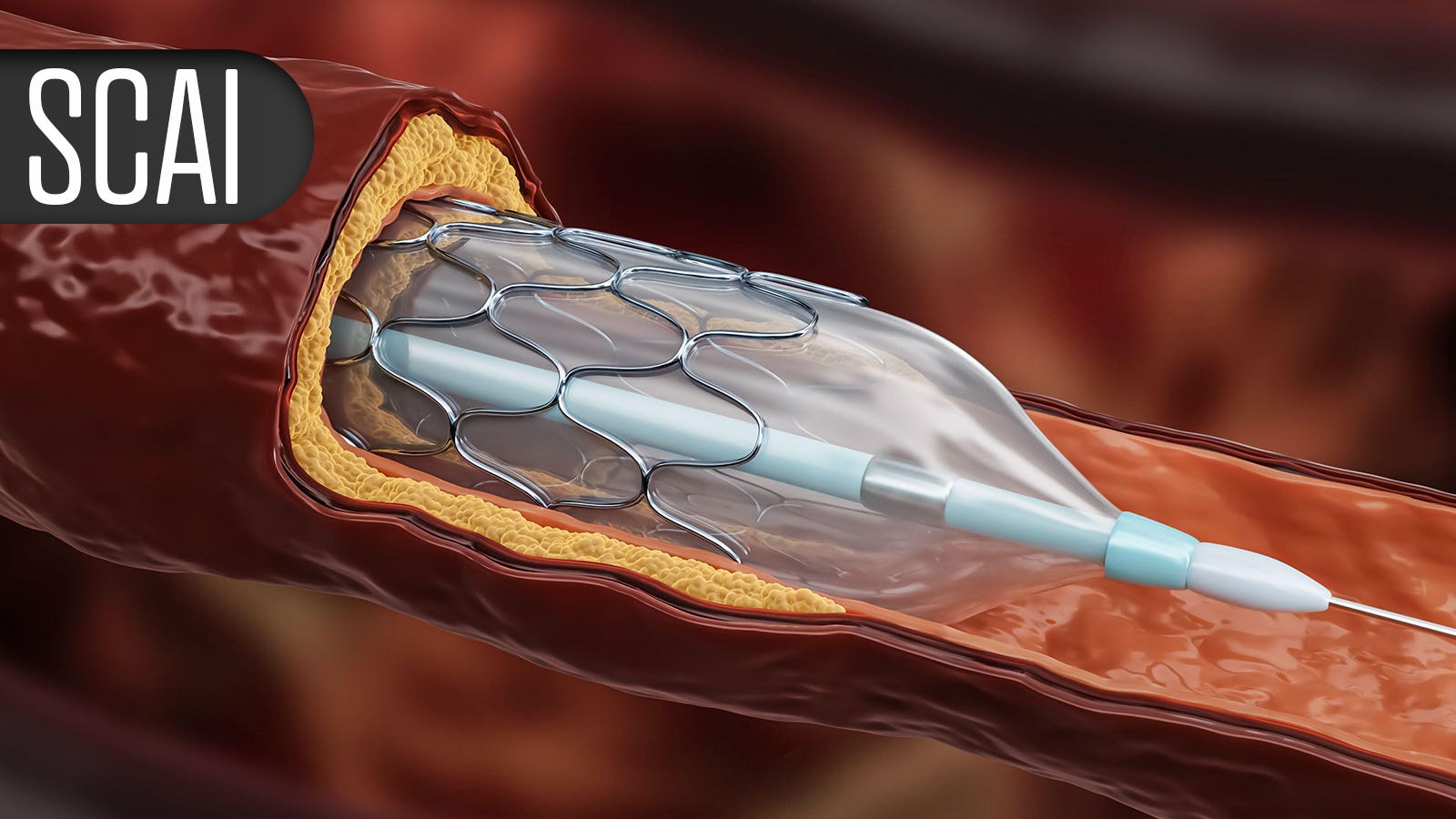
Introducción
Cardiovascular protection with GLP-1 receptor agonists may benefit patients undergoing certain transcatheter procedures, according to two observational studies.
When used as an adjunct to transcatheter aortic valve replacement (TAVR), tirzepatide (Mounjaro, Zepbound) reduced heart failure (HF) events in the 1 year after the procedure, reported Ibrahim Mortada, MD, of the University of Texas Medical Branch at Galveston, and colleagues.
Separately, major adverse cardiovascular events (MACE) at 1 year were also significantly reduced among GLP-1 drug users undergoing carotid artery stenting (CAS), reported Abdullah Ghuman, MD, and Maumita Das, MD, both of TidalHealth Peninsula Regional in Salisbury, Maryland.
Both studies were presented at the Society for Cardiovascular Angiography and Interventions (SCAI) annual meeting in Montreal and published in JSCAI.
Beneficios de Tirzepatide y TAVR
In the TAVR study, tirzepatide had benefits that appeared specific to HF and renal pathways without a broad effect on atherosclerotic events.
Tirzepatide was associated with reduced HF events when initiated in the 1 year after TAVR, with patients prescribed the dual GIP/GLP-1 drug having fewer events versus non-users (44.9% vs 55.3%, HR 0.68, 95% CI 0.56-0.83).
There was also a signal of reduced acute kidney injury in these patients (9.7% vs 17.1%, HR 0.63, 95% CI 0.43-0.93), Mortada and colleagues reported.
Meanwhile, there were no improvements in acute myocardial infarction (MI; 5.7% vs 8.1%, HR 0.81, 95% CI 0.48-1.37) or ischemic stroke (6.7% vs 10.5%, HR 0.73, 95% CI 0.45-1.17).
Importantly, the persistence of HF and cardiorenal events after TAVR likely reflects underlying metabolic dysfunction rather than body size alone, highlighting the need for adjunctive therapies targeting cardiometabolic pathways rather than weight classification alone.
These findings support the hypothesis that metabolic optimization may represent an important adjunctive strategy in the care of patients with obesity undergoing TAVR.
Drugs GLP-1 Después de la Revascularización Carotídea
GLP-1 receptor agonists also showed promise as adjunctive therapy in patients undergoing carotid revascularization.
Rates of MACE at 1 year were significantly lower in patients undergoing CAS who had GLP-1 medication exposure before or after the procedure (39.7% vs 44.6% for nonexposed peers, risk ratio [RR] 0.89, 95% CI 0.80-0.99).
The authors noted the persistently elevated periprocedural stroke or death rates with CAS compared with carotid endarterectomy in symptomatic patients.
Given the high burden of polyvascular atherosclerosis in patients undergoing CAS, GLP-1 RAs may represent a biologically plausible adjunct for reducing postprocedural cardiovascular events.
Of note, the benefit with GLP-1 drugs after CAS was driven by a particularly large reduction in all-cause mortality (3.9% vs 8.9%, RR 0.44, 95% CI 0.30-0.64).
Our study may have been underpowered to detect differences in individual ischemic components.
Detalles del Estudio
Both retrospective studies used electronic health record (EHR) data from the TriNetX Global Collaborative Network.
The study by Mortada included adults with obesity who underwent TAVR from 2020 to 2025, split between initiators of tirzepatide after TAVR and non-users.
The other study included 906 adults undergoing CAS from 2015 to 2023 who had GLP-1 drug exposure and included 29,476 controls undergoing CAS with no such exposure.
Both studies left residual confounding a possibility, and the reliance on hospital-based records was a potential source of selection bias.
Disclaimer: This information is intended for educational purposes only and is not a substitute for professional medical advice or treatment.
Fuente: https://www.medpagetoday.com/meetingcoverage/scai/120958
Join the doctors who get the most relevant medical news, curated by specialty, every week — no spam, unsubscribe anytime.