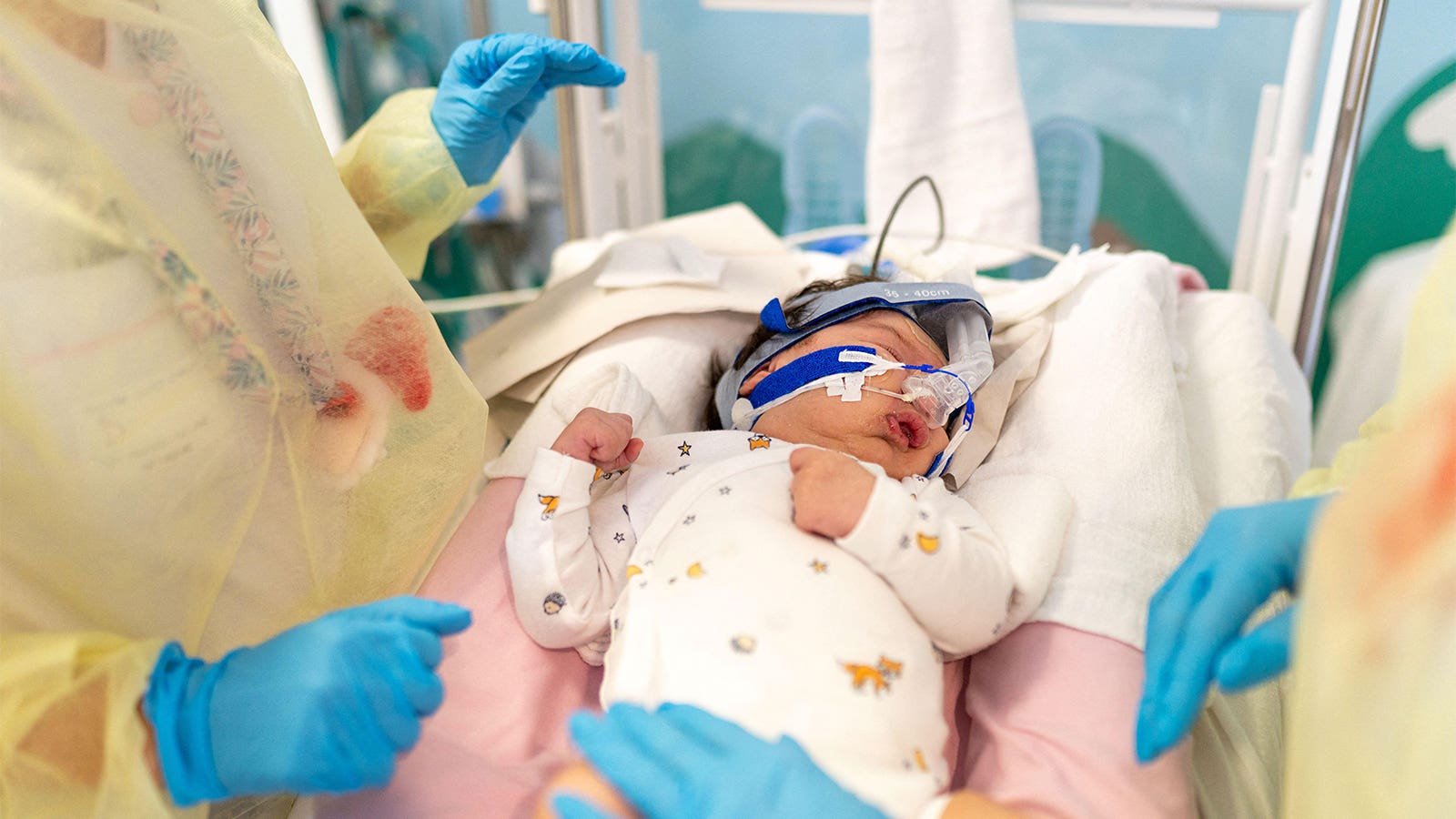
Prone positioning of infants on high-flow nasal cannula oxygen support for bronchiolitis didn’t significantly reduce risk of progression to needing positive pressure ventilation, a large randomized trial showed.
Escalation of care occurred in 15.0% of infants placed in the prone position and 20.8% in the supine position, a difference that did not reach statistical significance (adjusted OR 0.66, 95% CI 0.40-1.07, P=0.09), reported Florent Baudin, MD, PhD, of Hôpital Femme Mère Enfant in Bron, France, and colleagues.
Further Research Needed
However, the wide 95% confidence interval around the observed odds ratio suggests that this study was not definitive and further research is warranted. The research group concluded in JAMA.
Their findings from the PROPOSITIS trial were also presented at the International Congress of the European Society of Paediatric and Neonatal Intensive Care in Valletta, Malta.
Mechanistic Plausibility
Mechanistically, prone positioning is a plausible way to improve lung mechanics with limited safety risk, as evidenced in PROPOSITIS with similar comfort measures, feeding tolerance, and serious adverse event rates between groups.
While putting a patient face down has been shown effective in restrictive lung diseases like severe acute respiratory distress syndrome and COVID-19, there’s been less rigorous evidence for primarily obstructive pathophysiology or for use in children.
Subset Analysis
While the PROPOSITIS findings were negative on first glance, there was heterogeneity suggesting benefit in a subset of responders. Children able to tolerate 8 hours of prone positioning had fewer escalations than the supine positioning group (9% vs 20%, OR 0.35, 95% CI 0.18-0.67), but the escalation rate was high among those for whom prone positioning was abandoned before the target duration of 24 hours (30% overall and 50% for those who spent 2-18 hours prone).
Prone positioning was not universally beneficial in this trial, nor is it among any form of respiratory failure treated with prone positioning. Any number of patient-level factors might drive response in critical bronchiolitis, although no obvious characteristics stood out in the trial other than time in the prone position.
Fuente: https://www.medpagetoday.com/pulmonology/generalpulmonary/121806
Join the doctors who get the most relevant medical news, curated by specialty, every week — no spam, unsubscribe anytime.