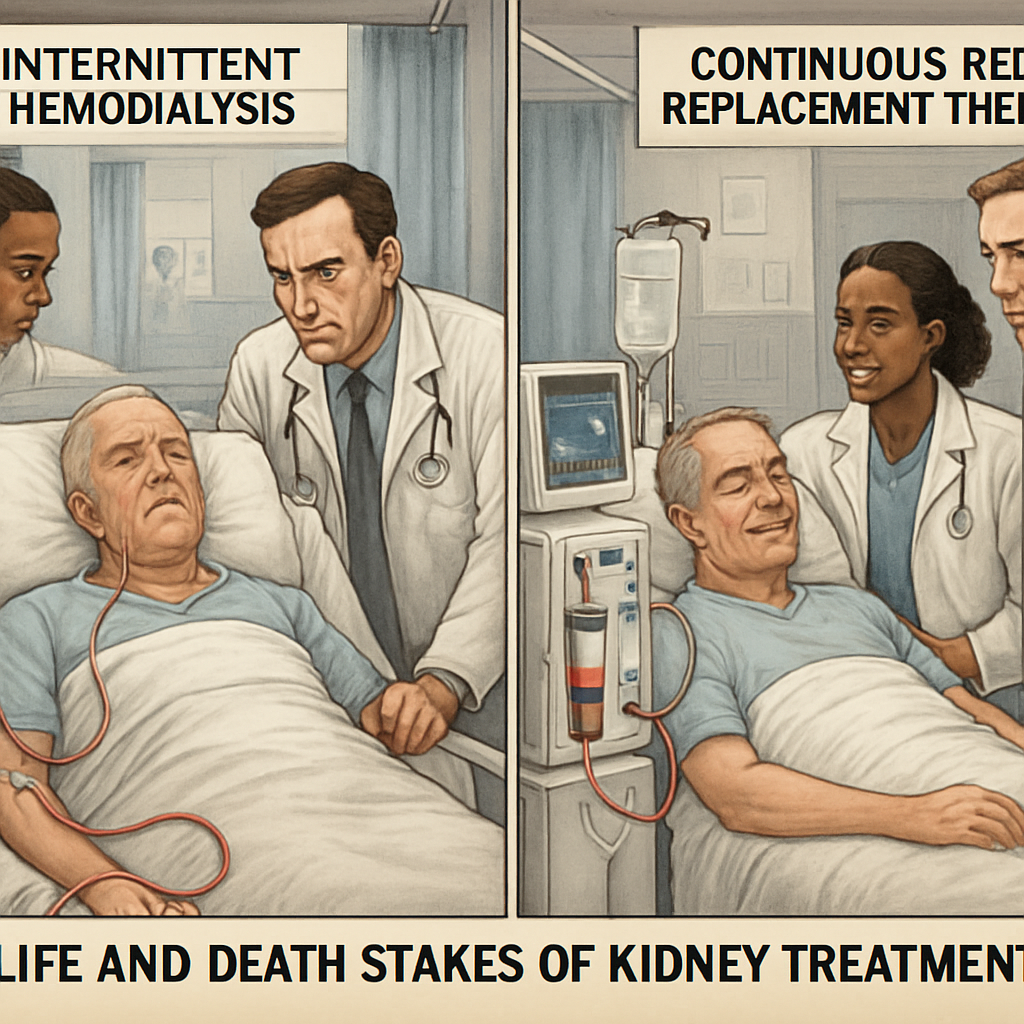
Intermittent hemodialysis has been found to be inferior to continuous renal-replacement therapy in critically ill patients suffering from acute kidney injury, with findings from the randomized ICRAKI trial indicating a higher incidence of death in the intermittent group.
Resultados del estudio
In the intention-to-treat analysis involving 535 patients, a major adverse kidney event occurred by day 90 in 78.1% of the intermittent group compared to 71.6% in the continuous group, as reported by Stéphane Gaudry, MD, PhD, from Avicenne Hospital in Bobigny, France, and colleagues.
However, the trial was halted early by the data and safety monitoring board when a higher mortality signal was detected in the intermittent group. By day 90, mortality rates were 63.1% in the intermittent arm versus 53.5% in the continuous arm, suggesting a 30% increased risk of death with intermittent treatment (HR 1.30, 95% CI 1.04-1.63).
Justificación y hallazgos inesperados
While the decision to halt the trial was ethically justified, the researchers noted it might have affected the precision of treatment-effect estimates, potentially overestimating the observed mortality impact. Most participants were admitted to the intensive care unit (ICU) for medical issues rather than surgical ones, with many exhibiting acute respiratory distress syndrome and receiving invasive mechanical ventilation upon ICU admission.
The finding of higher mortality among the intermittent hemodialysis group was described as “unexpected” and not easily explained based on previous literature.
Post hoc analyses indicated that intermittent hemodialysis might lead to greater hemodynamic stress; however, these findings do not establish a causal mechanism.
Diferencias en la población del estudio
The research team also highlighted that earlier trials did not use trial-proven criteria for initiating renal-replacement therapy, while ICRAKI only included patients with documented indications, which could partially explain differing results.
Discusión sobre las modalidades de tratamiento
In an accompanying editorial, Paul Palevsky, MD, discussed the challenges of comparing these modalities, noting that earlier studies largely showed no difference in survival. He further elaborated on the benefits and risks of both intermittent hemodialysis— which can rapidly correct fluid and electrolyte imbalances — and continuous renal-replacement therapy, which theoretically induces less hemodynamic stress.
Currently, clinical guidelines recommend continuous therapy for hemodynamically unstable patients. Nonetheless, ICRAKI’s findings prompt a broader inquiry into the optimal integration of therapies to enhance patient outcomes.
Detalles del ensayo multicéntrico
The multicenter trial originally aimed to enroll 1,000 participants but included 554 patients across French ICUs between October 2023 and July 2025. The median duration of renal-replacement therapy was 5 days for the intermittent group and 7 days for the continuous group.
Assigned therapies were maintained for at least 4 consecutive days unless kidney recovery occurred, after which treatment could switch based on clinical practices. Ultimately, the trial does not clarify which treatment method is preferable beyond the first three days.
Treatment switching was observed in 21.9% of the intermittent group versus 42.5% of the continuous group, with hypotension being the most prevalent complication in both arms.
The prespecified sensitivity and subgroup analyses were found to be consistent with main analyses.
Disclaimer: The information provided in this summary is for informational purposes only and should not be considered medical advice. Consult a healthcare professional for personalized recommendations and treatment options.
Fuente: https://www.medpagetoday.com/nephrology/generalnephrology/123414
Join the doctors who get the most relevant medical news, curated by specialty, every week — no spam, unsubscribe anytime.