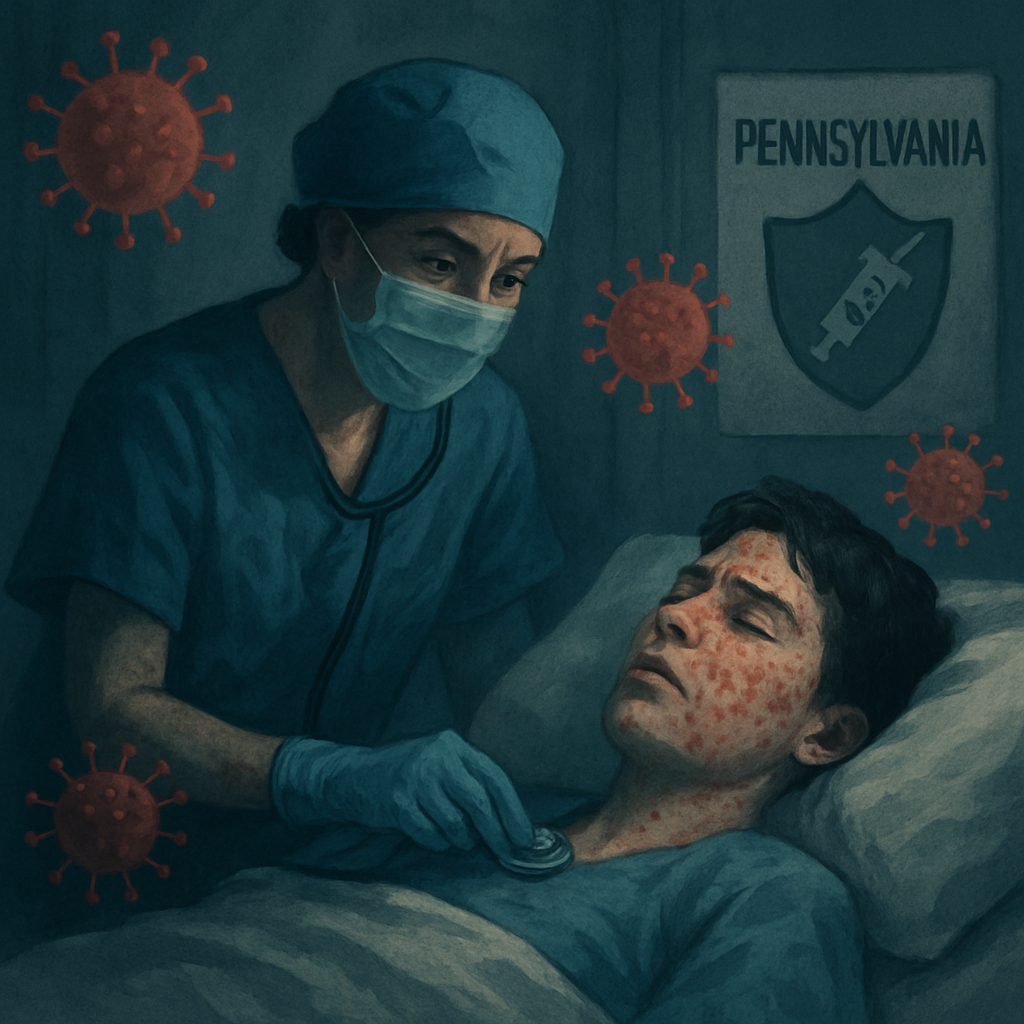
Pennsylvania health officials reported a fifth measles-associated death Wednesday as the U.S. endures its worst year for the disease since 1991.
The Pennsylvania Department of Health stated that the individual was from Lancaster County and was unvaccinated. No further information was provided regarding the deceased individual. Lancaster County’s coroner, Stephen Diamantoni, MD, mentioned that his office did not manage the case and that state officials have not shared any details.
The state’s other recorded deaths include an 18-year-old from Mifflin County, a 40-year-old woman from Jefferson County, and two infants in Lancaster County. All reported cases involved individuals who were unvaccinated, with the infants being too young to receive vaccinations according to current guidelines.
In the last two years, the U.S. has reported eight measles-associated deaths, surpassing the total of reported deaths from the previous three decades combined.
Pennsylvania’s ongoing measles outbreak has resulted in 943 reported illnesses across 39 counties this year. These measles-related deaths are the first reported in the state in 35 years.
The nation successfully eliminated local measles transmission in 2000 by maintaining high vaccination rates, but these rates have fallen below the 95% coverage needed to prevent outbreaks, leading to surges in measles infections in recent years.
In November, international health officials will convene to assess if the U.S. and Mexico have lost their measles-free status.
This situation has been developing over several years, as fewer children receive routine vaccinations due to parental waivers, access issues to healthcare, and widespread misinformation. Recent administrations, including that of former President Trump, have questioned vaccine safety and undermined public confidence in vaccines, which has exacerbated the decline in vaccination rates.
Disclaimer: The information provided is for educational purposes only and should not be considered a substitute for professional medical advice. Always consult a healthcare provider for concerns related to vaccination and public health.
Fuente: https://www.medpagetoday.com/infectiousdisease/generalinfectiousdisease/123215
Join the doctors who get the most relevant medical news, curated by specialty, every week — no spam, unsubscribe anytime.