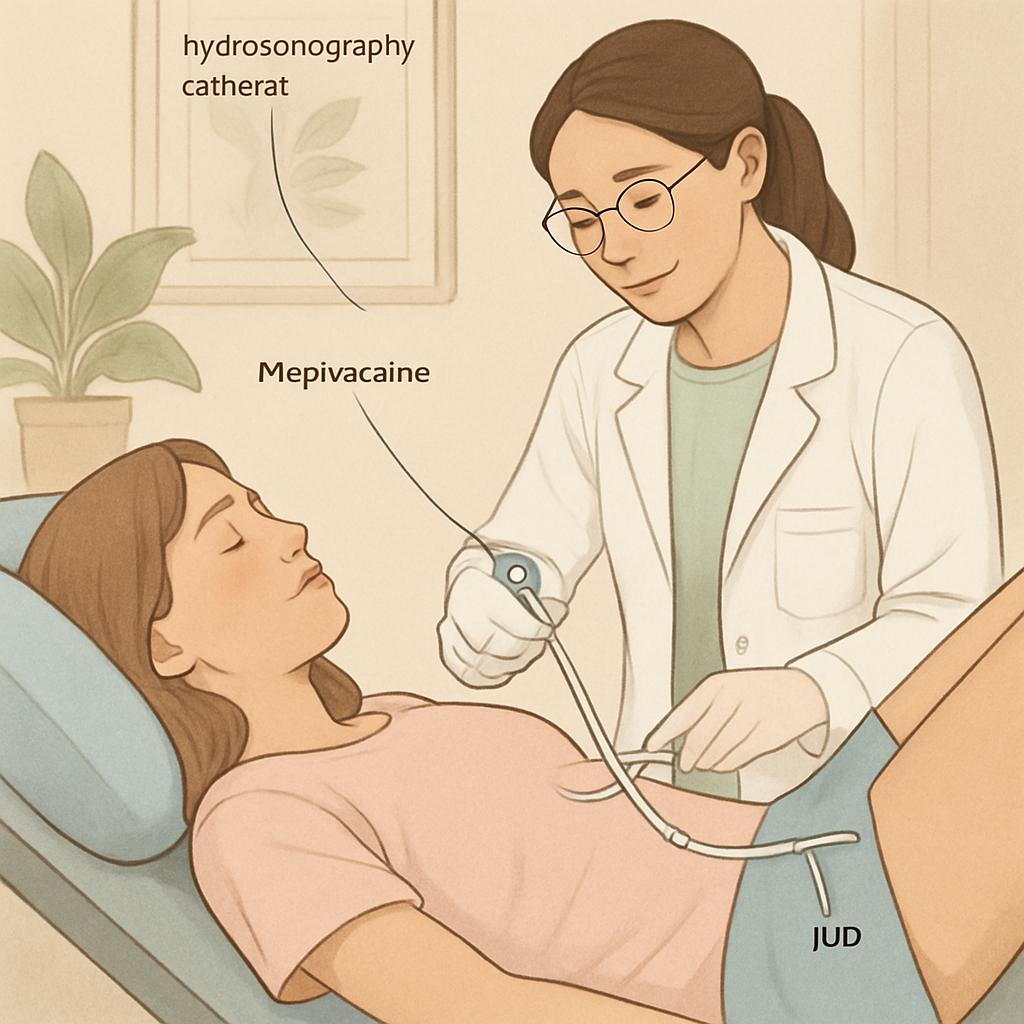
Intrauterine instillation of the anesthetic mepivacaine significantly reduced pain during intrauterine device (IUD) insertion, a Swedish randomized trial showed.
Mean pain score during IUD placement was 43.8 mm on a visual analog scale (range 0 to 100, with higher scores indicating worse pain) for patients who received mepivacaine administered via hydrosonography catheter versus 58.6 mm for those in the placebo group (P<0.001), reported Karin Elgemark, MD, of the Karolinska Institutet in Stockholm, and colleagues.
Patients’ Pain Experience
Nearly all patients (98.3%) in the mepivacaine group said their pain was tolerable compared with 91.4% of the placebo group (relative risk [RR] 1.08, 95% CI 1.02-1.13). The number needed to treat for one patient to report tolerable pain was 15.
“Considering the frequency of IUD placements worldwide, even modest reductions in the proportion of individuals experiencing intolerable pain may have important clinical implications,” Elgemark and team wrote.
Of note, 79% of patients who received mepivacaine said they’d recommend the pain relief method to others versus 68.6% of the placebo group (RR 1.15, 95% CI 1.01-1.31).
Healthcare Provider Perspectives
Nikki Zite, MD, MPH, an ob/gyn at the University of Tennessee Graduate School of Medicine in Knoxville, indicated that “patients benefit from knowing providers are concerned and trying to address their pain, even if they don’t receive actual pain medication.”
Growing Awareness of IUD Insertion Pain
In recent years, patients have increasingly reported pain during IUD insertion. The CDC has urged physicians to counsel their patients about possible pain associated with IUD placement, while the American College of Obstetricians and Gynecologists has called for clinicians to discuss pain management options.
Study Design and Limitations
This double-blind trial involved 370 patients aged 18 to 31 opting for either a copper IUD or hormonal IUD. Participants were randomly assigned to receive either mepivacaine or sodium chloride before the procedure. The study’s design aimed to evaluate the pain relief effects more robustly than previous methods.
While the study is well designed for its target outcome, it did not account for clinician-assessed IUD placement difficulty or patient anxiety, which may influence results.
Disclaimer: This article is for informational purposes only and should not be considered as medical advice. Always consult a healthcare professional for medical concerns.
Fuente: https://www.medpagetoday.com/obgyn/generalobgyn/123073
Join the doctors who get the most relevant medical news, curated by specialty, every week — no spam, unsubscribe anytime.