
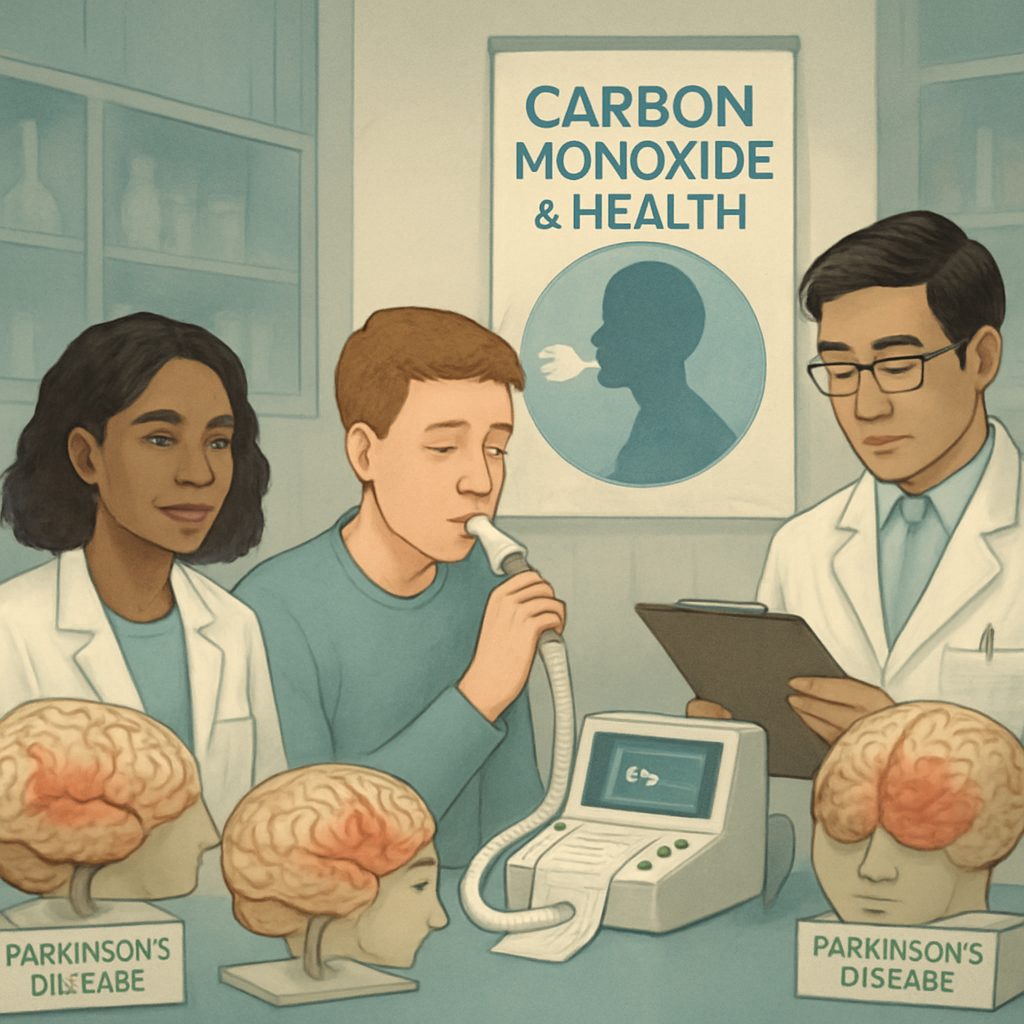
Non-smokers with higher exhaled carbon monoxide (CO) levels exhibited a significantly reduced risk of developing Parkinson’s disease, as revealed by a comprehensive study involving over 500,000 individuals in China.
Key Findings
Among participants who never smoked, exhaled CO levels of 3 parts per million (ppm) or greater were correlated with an approximately 30% decrease in the risk of Parkinson’s disease (HR 0.71, 95% CI 0.59-0.84) compared to those with levels below 3 ppm, reported Andri Iona, DPhil, from the Nuffield Department of Population Health at the University of Oxford, along with his co-authors.
Interestingly, regular smoking also seemed to be linked with a lowered risk of Parkinson’s disease (HR 0.70, 95% CI 0.62-0.79); however, it was simultaneously associated with increased risks of other serious conditions such as lung cancer, ischemic heart disease, stroke, and overall mortality.
Implications of Carbon Monoxide
This study provides valuable evidence indicating a potentially protective role for carbon monoxide against Parkinson’s disease, according to co-author Clara Bueno Lopez, MSc, also affiliated with Oxford University. Epidemiological studies have frequently noted lower risks of Parkinson’s among smokers, a relationship that previous research linked to nicotine.
More recently, there has been a shift towards examining carbon monoxide as a significant factor. Sirwan Darweesh, MD, PhD, from Radboud University Medical Center in the Netherlands, and his colleagues highlighted that carbon monoxide can form during both cigarette burning and the incomplete combustion of carbon-containing fuels.
While carbon monoxide exposure typically has many harmful health effects, it also functions as an essential signaling molecule that can protect against oxidative damage and aid in immune responses and cellular processes.
Study Design and Limitations
The current research analyzed data from 512,701 adults involved in the China Kadoorie Biobank, which enrolled participants from 2004 to 2008. The average age was 52 years, with 58.9% being women. Smoking statuses were self-reported, and baseline exhaled CO levels were measured.
About 74.5% of men and only 3.3% of women reported having smoked regularly, with higher mean exhaled CO levels recorded among regular smokers (11.1 ppm) compared to non-smokers (3.5 ppm) and those who occasionally or formerly smoked.
The study followed participants for a median of 12.1 years, identifying 1,131 cases of Parkinson’s disease and 2,949 cases of other neurodegenerative diseases. Findings were adjusted for various factors, including sociodemographic variables and lifestyle attributes.
In non-smokers, a clear inverse relationship was observed between exhaled CO levels and Parkinson’s risk, with risk decreasing corresponding to CO level increases.
Future Research
An ongoing phase IIa clinical trial is currently exploring the effects of a low-dose oral carbon monoxide liquid drug in individuals with Parkinson’s disease, as noted by the researchers.
Disclaimer: This content is intended for informational purposes only and is not a substitute for professional medical advice, diagnosis, or treatment. Always seek the advice of your physician or other qualified health provider with any questions you may have regarding a medical condition.
Fuente: https://www.medpagetoday.com/neurology/parkinsonsdisease/122914
Join the doctors who get the most relevant medical news, curated by specialty, every week — no spam, unsubscribe anytime.