
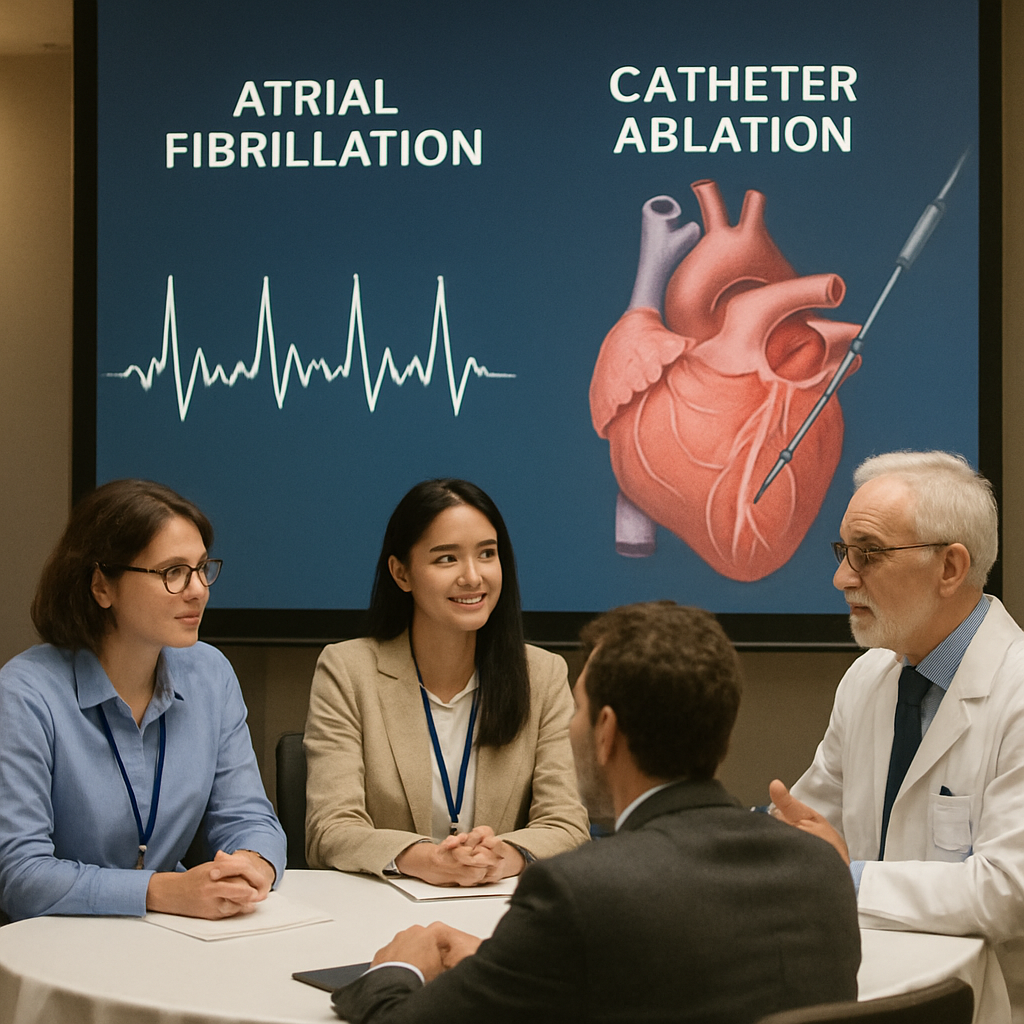
Recently presented studies on catheter ablation techniques for atrial fibrillation (Afib) during the European Society of Cardiology (ESC) Congress revealed significant findings that challenge previous beliefs about the effectiveness of these procedures.
Findings from Clinical Trials
The pulmonary vein isolation (PVI-SHAM-AF) trial indicated that catheter ablation failed to provide significant improvements in quality of life compared to a sham intervention. Specifically, the Atrial Fibrillation Effect on the Quality-of-life Questionnaire (AFEQT) scores improved from an average of 61.3 at the start of the trial to 81.1 after 6 months in the ablation group, but did not demonstrate superiority over the sham group’s score increase from 59.2 to 74.9 (P=0.36). This was addressed by Dr. Rolf Wachter, highlighting the mixed outcomes that arose after participants were cardioverted during both procedures.
Adjunctive Strategies Explored
In separate presentations, researchers highlighted adjunctive strategies, like low-voltage zone ablation, which showed improvements in rhythm outcomes and quality of life in the IDEAL-AF trial. Conversely, the PIFPAF-PFA trial, which investigated the efficacy of posterior left atrial wall isolation, presented disappointing results with no significant reduction in atrial tachyarrhythmias.
While the IDEAL-AF trial supports the role of individualized therapies for patients with persistent Afib, the findings of PIV-SHAM-AF raise questions about the efficacy of standard ablation procedures when measured against sham controls. The differences in outcomes may be attributed to various factors including trial design, patient selection, and underlying AFEQT scores at baseline.
Conclusions and Future Directions
Overall, while PVI-SHAM-AF does not undermine the potential benefits of catheter ablation, it emphasizes the importance of tailored approaches based on individual patient profiles and conditions. As highlighted by Kistler and colleagues, future catheter ablation can benefit from enhanced mapping technologies to optimize patient outcomes.
Disclaimer: This information is not intended as a substitute for professional medical advice, diagnosis, or treatment. Always seek the advice of your physician or other qualified health provider with any questions you may have regarding a medical condition.
Fuente: https://www.medpagetoday.com/meetingcoverage/esc/122875
Join the doctors who get the most relevant medical news, curated by specialty, every week — no spam, unsubscribe anytime.