Introducción
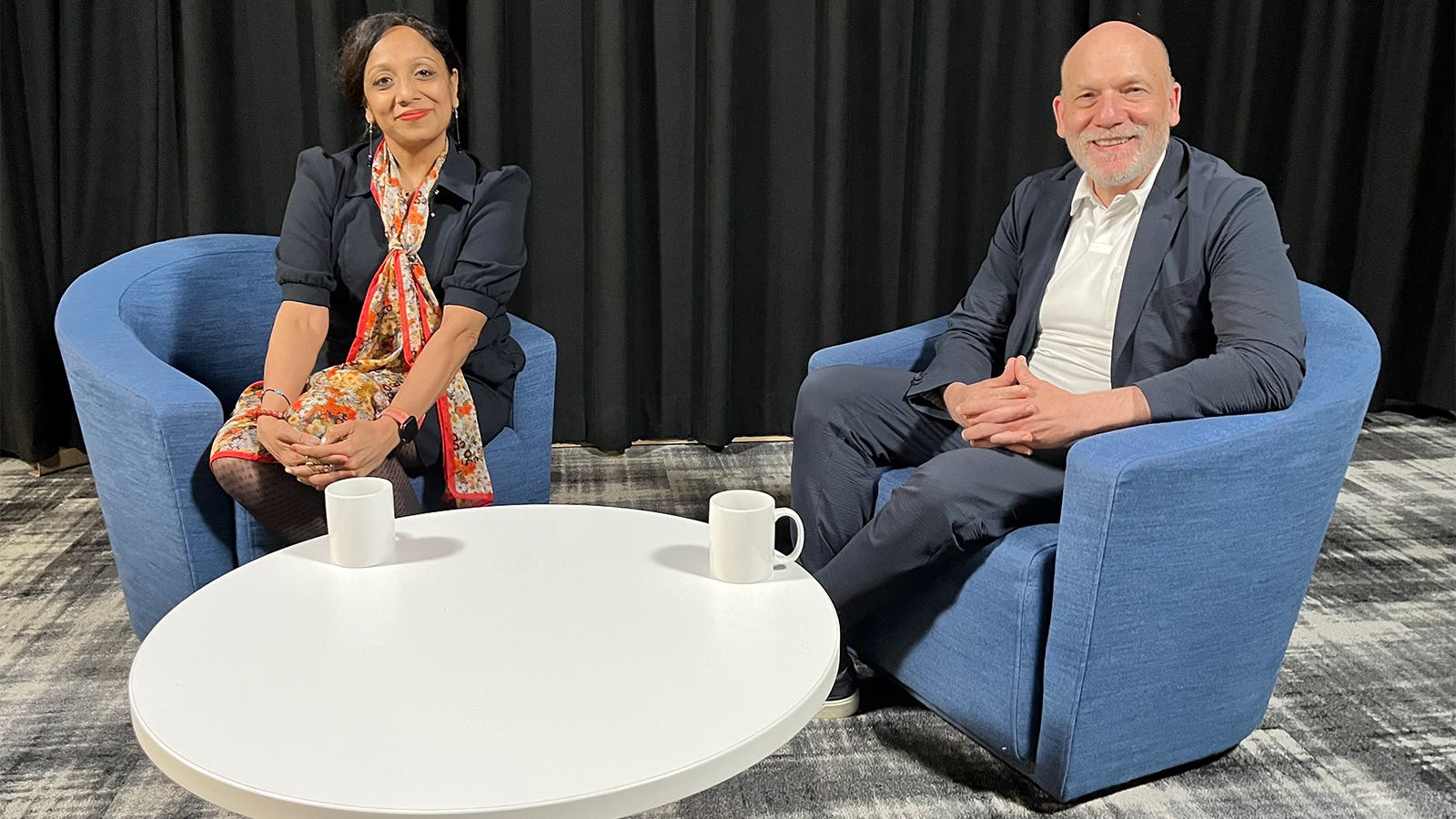
Boehringer Ingelheim’s Brian Hilberdink, President, U.S. Human Pharma, and Neerja Balachander, M.D., Ph.D., VP, U.S. Clinical Development Medical Affairs and Cardiorenal Metabolic Therapeutic Area Head, reflect on key developments and what lies ahead for cardiovascular, renal and metabolic care, including implications for obesity, liver disease and chronic kidney disease.
Reflexiones sobre la situación actual
Brian Hilberdink: Neerja, I was reflecting on what an exciting time it is for Boehringer Ingelheim to really be involved in the cardio-renal-metabolic space. And it was just a reflection, we were talking before about the fact that despite all of the innovation that has happened over the past several decades, there’s still so much work to be done.
Neerja Balachander: Very interesting times and exciting times, but I think it’s important for us to be reminded of the gravity of the situation. Cardio-kidney-metabolic conditions affect more than a billion patients across the world and continue to be the number one cause for mortality and morbidity. In the US, 90% of adults, according to the American Heart Association, are affected at least in stage one of the cardio-kidney-metabolic conditions. So, I’m excited that we at Boehringer are taking such an active role.
La importancia de un enfoque integrado
Brian Hilberdink: So I think it’s interesting that you’re talking about this continuum, and you’re talking about cardio-kidney-metabolic. Do you remember when we would go to meetings like the ADA and it was a diabetes meeting and we focused on blood glucose regulation. Now it’s an obesity meeting. It’s a MASH meeting. It’s a chronic kidney disease meeting. It’s talking about all of these comorbidities together. And what do you think has resulted? Why that shift?
Neerja Balachander: The diseases are not siloed. And I think finally, we in science as well as patients are realizing that it’s not fair for these diseases to be treated in silos. For the first time, I think in 2025, the WHO has come up with guidelines that include GLP-1s. AHA and ACC have come out with guidelines that want primary care physicians to start screening for patients at risk through a urine albumin test for chronic kidney disease. And at the same time, AHA is coming up with the cardio-kidney-metabolic continuum where patients should be treated as coordinated care by multiple specialties together.
Colaboración en el tratamiento
Brian Hilberdink: So, taking this collaborative approach from both alignment of treatment guidelines, but also in terms of healthcare professionals meet these patients, I think is absolutely essential because again, you are talking about this comorbid metabolic patient.
Neerja Balachander: Yes. But for instance, the primary care providers have been overloaded. So, I think we have to break it down and make it simple for them, especially for modifiable risk factors. So, in that context, I’d love to talk to you about the Detect the SOSopens in a new tab or window campaign, which is so exciting.
Campaña “Detect the SOS”
Brian Hilberdink: I’d love to talk about the Detect the SOS campaign. So, this is a campaign that Boehringer has done in collaboration with several different stakeholders to really help get the word out there that your kidneys could be sending out an SOS telling you that you have a cardiovascular risk factor. And really the campaign’s all around how do we get patients to test for microalbuminuria by doing a uACR test.
Neerja Balachander: Yes. Kidney conditions can cause morbidity in the heart. I mean, who would have thought? Of course they can. And similarly, I think we’re doing something exciting even in obesity. Obesity, again, lies in the middle of this metabolic continuum. We have known this for a while because it is associated with prediabetes and insulin resistance. It is associated with hypertension. It is associated with more than 200 comorbid conditions, and yet we seem to be continually blaming the patient.
El papel del hígado y la obesidad
Brian Hilberdink: Yeah, looking at obesity, you have to start off by understanding it is a metabolic disease. And it reminds me of kind of where we were with Type 2 diabetes 25 years ago. It used to be blame the patient. They didn’t take care of themselves. They’ve gained weight. Now you’ve gone and given yourself Type 2 diabetes. And I think, you know, the science has evolved to kind of understand insulin resistance. There is a lot of biology behind it. We understand the pathophysiology much better, but for some reason that often doesn’t translate over to obesity. We believe that it’s mostly about willpower. It’s about bad choices. It’s about diet. And of course, there’s different socioeconomic determinants, but at the end of the day, when we see someone living with obesity, and if you’re a healthcare professional, what can you do to help them?
Neerja Balachander: I think the science helps us move away from stigma. For instance, when we were in medical school, the first year, you would easily understand that liver lies in the center of this metabolism. It helps you metabolize carbohydrates, fats, and proteins. And we know, for instance, that when a patient suffers from obesity that their liver plays an important role and is affected by it. For instance, 75% of the patients, three out of four patients who suffer from obesity might have metabolic-associated liver disease – that is, MASLD – and a few of those patients will progress to have a much more serious condition, which is metabolic-associated steatohepatitis, and these patients could end up with cirrhosis, cancer, and need transplantation.
Conclusión y responsabilidad
Brian Hilberdink: I think you stated it really well. I mean, it’s, think about obesity, let’s think about that liver. And if you really want to focus on metabolic health, you need to focus on that very important organ. Just like if you’re concerned about cardiovascular risk factors, you need to understand, are the kidneys sending out that SOS? Do you have that elevated microalbuminuria because we can do something about it. And I guess that’s where I take a lot of pride in what we’re doing at Boehringer, that it isn’t just about developing the molecules, it’s also about what can we do? How do we play our part in creating this public awareness? And again, I think our primary care physicians… how can you not be overwhelmed? So how do we provide that assist?
Nota de descargo de responsabilidad: Este artículo tiene fines informativos y no reemplaza el consejo médico profesional. Siempre consulte a un médico o a otro proveedor de salud calificado con cualquier pregunta que pueda tener respecto a una afección médica.
Fuente: https://www.medpagetoday.com/ad-insights/industry-clinic/122318
Join the doctors who get the most relevant medical news, curated by specialty, every week — no spam, unsubscribe anytime.