
Investigations Highlight Conflict of Interest
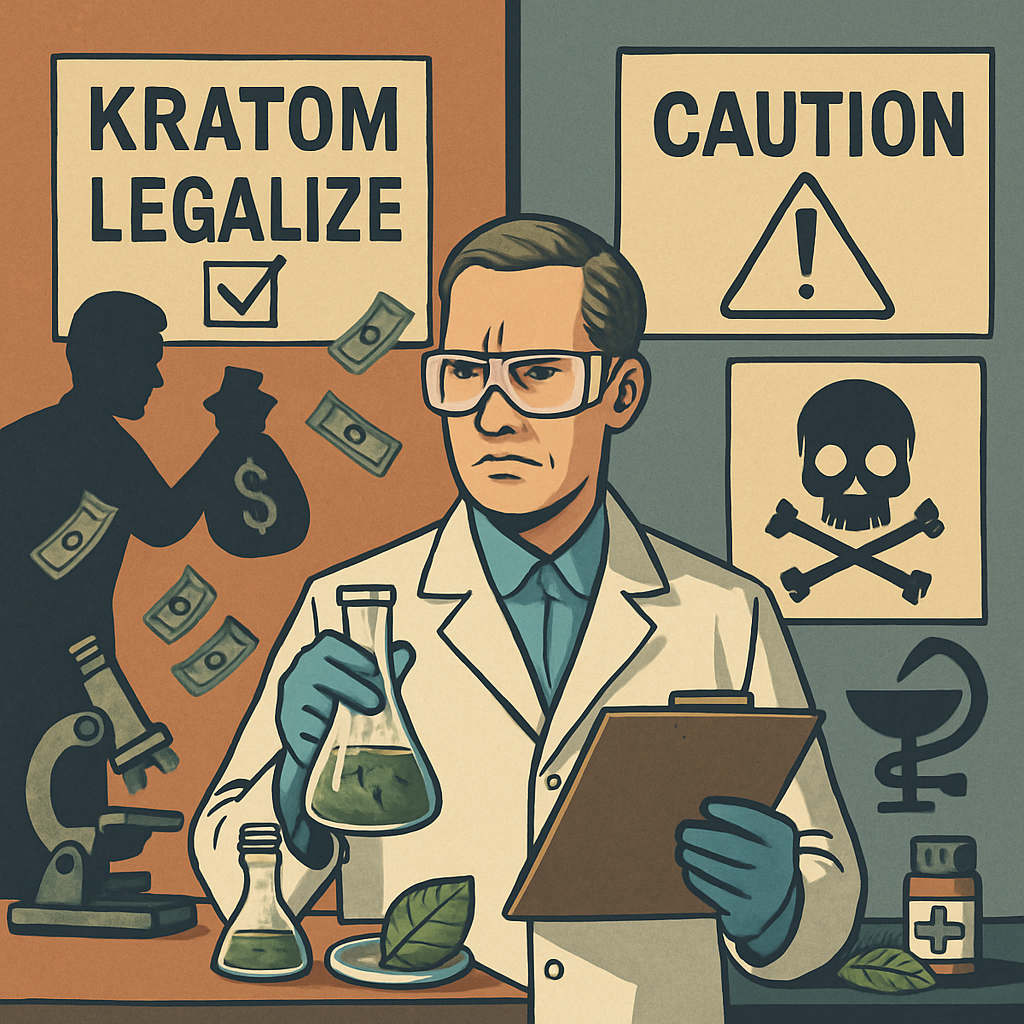
The leading scientist advocating against the criminalization of kratom, a substance associated with numerous health risks, has been found to not disclose significant financial ties to the American Kratom Association (AKA), which lobbies for the substance’s legality. This raises questions about the integrity of the information provided to policymakers.
Funding and Financial Ties of Dr. McCurdy
Dr. Christopher McCurdy, a professor at the University of Florida, has accepted funding for various activities, including travel reimbursements and donations to his university’s foundation from the AKA. However, these financial relationships have not been reported in his conflict of interest statements, potentially skewing public perception and policy-making.
Kratom’s Health Risks and Usage Trends
The rising availability of kratom derivatives has prompted concerns from health authorities. According to the CDC, there were over 5,200 reported overdose deaths involving kratom from 2020 to 2024 in the United States, alongside a staggering 1,200% increase in poison control calls related to kratom in the past decade.
Advocacy Efforts and Public Perception
McCurdy has notably played a role in advocating for kratom’s legality, often underestimating its associated risks. His arguments cite long-term scientific research; however, concerns over therapeutic potential are increasingly overshadowed by documented adverse effects, including potential dependency and severe withdrawal symptoms.
Calls for Transparency
Critics, including pharmacists and healthcare professionals, argue that McCurdy should be more transparent regarding his affiliations with the kratom industry while providing public statements or conducting research. Advocates for restrictions on kratom emphasize the need for full disclosure in order to maintain the credibility of scientific research.
Research and Regulatory Implications
McCurdy’s research into kratom’s potential therapeutic applications has received federal funding amounting to roughly $100 million. However, there are growing concerns that declaring kratom illegal could hinder such important research, complicating efforts to develop safer use policies.
Important Regulatory Distinctions
While advocating for kratom, McCurdy has also raised alarms about new derivatives that exhibit higher abuse potential than traditional forms of kratom. This nuanced position reflects ongoing efforts to distinguish between varying forms of kratom and their respective safety profiles.
Public Statements and Accountability
Through his testimony, McCurdy acknowledges that while risks do exist with kratom, the decision to criminalize should be approached with an understanding that responsible regulation—and not prohibition—might better serve public health needs.
Conclusión y Nota de Descargo de Responsabilidad
Given the conflicting dynamics of science, funding, and advocacy in the kratom debate, ongoing scrutiny is warranted to ensure public safety and uphold scientific integrity.
Disclaimer: The above information is for educational purposes only and should not be considered medical advice. Always consult with a healthcare professional for medical concerns or questions regarding treatment options.
Fuente: https://www.medpagetoday.com/publichealthpolicy/opioids/122896
Join the doctors who get the most relevant medical news, curated by specialty, every week — no spam, unsubscribe anytime.