
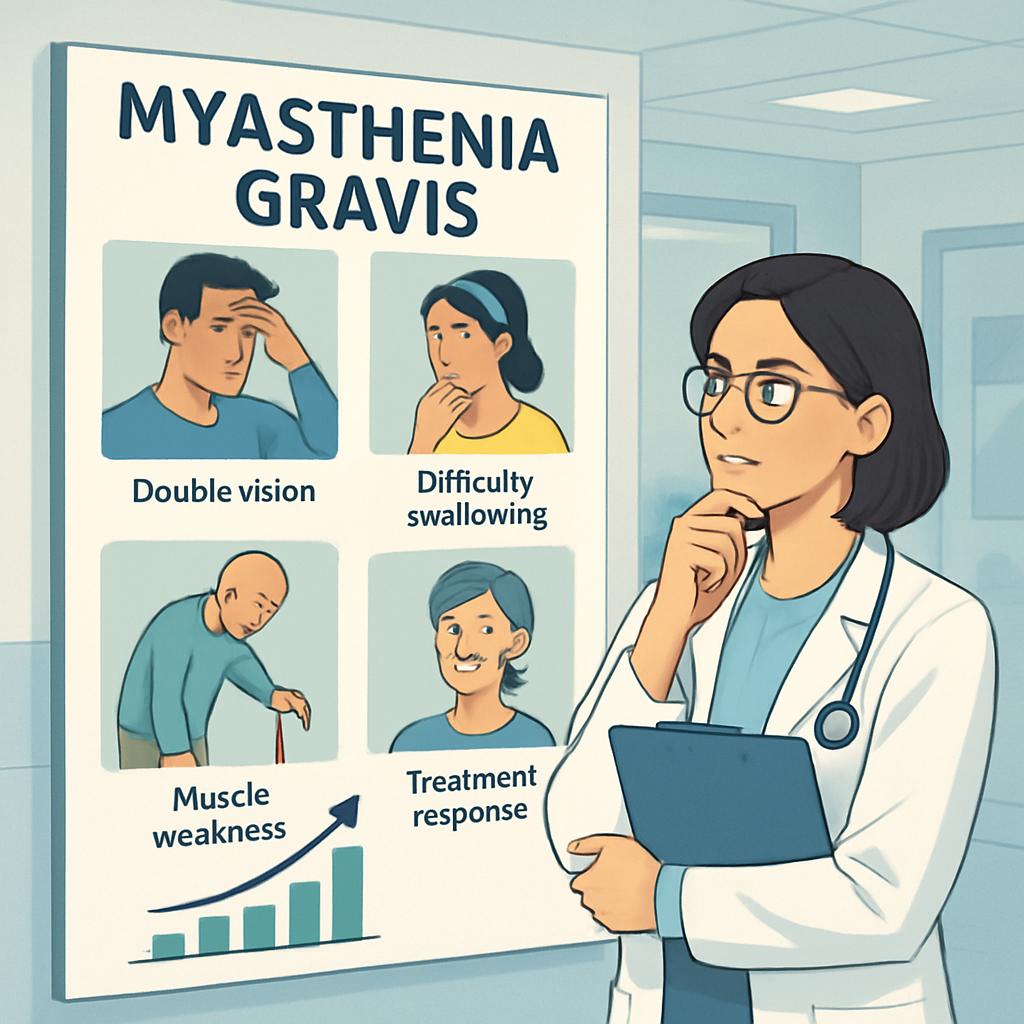
Intravenous efgartigimod (Vyvgart) has consistently shown efficacy and safety in patients with generalized myasthenia gravis who do not have detectable anti-acetylcholine receptor (AChR) antibodies, according to data from the open-label phase of the ADAPT SERON trial.
Participants maintained an average improvement of around 5 points in Myasthenia Gravis Activities of Daily Living (MG-ADL) scores up to week 52, reported Dr. James Howard from the University of North Carolina at Chapel Hill during the 2026 American Association of Neuromuscular and Electrodiagnostic Medicine conference in Orlando. The MG-ADL scores range from 0-24, with higher scores indicating greater impairment.
The safety profile observed over one year was consistent with previous studies of efgartigimod, showing no new or unexpected safety issues.
Efgartigimod is a human immunoglobulin G1 (IgG1) antibody fragment that binds to the neonatal Fc receptor (FcRn), resulting in a reduction of circulating IgG autoantibodies. It was approved in 2021 to treat generalized myasthenia gravis with anti-AChR antibodies.
Notably, around 20% of patients with generalized myasthenia gravis do not exhibit detectable serum antibodies against AChR. Some of these patients may have autoantibodies targeting other neuromuscular junction proteins, including muscle-specific tyrosine kinase (MuSK) and low-density lipoprotein receptor-related protein 4 (LRP4).
Around 1% to 10% of myasthenia gravis patients have anti-MuSK antibodies, while 1% to 5% have anti-LRP4 antibodies. Approximately 10% are classified as triple negative, lacking detectable autoantibodies against AChR, MuSK, or LRP4.
The double-blind, placebo-controlled ADAPT SERON trial demonstrated that efgartigimod improved symptoms in myasthenia gravis patients with anti-MuSK, anti-LRP4, or triple seronegative subtypes. Based on these results, the FDA expanded efgartigimod’s approval in May 2026 to include all patients with generalized myasthenia gravis.
During the first four weeks of the ADAPT SERON study, MG-ADL scores decreased by an average of 3.35 points from baseline in the efgartigimod group, which was 1.46 points better than the placebo group (P=0.007).
The benefits continued during the open-label phase, with Dr. Howard noting that further improvements were observed with subsequent treatment cycles.
“This is evident when we analyze the cumulative degree of improvement in ADL — those who achieved at least a 2-, 3-, or 4-point reduction with subsequent cycles over time. More treatment correlates with a better response,” he stated.
These findings imply that pathogenic IgGs may drive the manifestations of generalized myasthenia gravis across different patient subtypes, irrespective of autoantibody presence.
The ADAPT SERON trial included 119 participants with a confirmed diagnosis of generalized myasthenia gravis without anti-AChR antibodies. Eligible participants had an MG-ADL total score of 5 or more.
Of the participants, nearly half (58) were randomized to receive efgartigimod. Among this group, 32 were triple seronegative, 20 had anti-MuSK antibodies, and six had anti-LRP4 antibodies. Approximately a quarter (14) had previously undergone thymectomy. The efgartigimod group had an average MG-ADL score of 9.9 at baseline and a mean age of 50.6 years, with 75.9% being female.
Treatment with efgartigimod was administered as once-weekly infusions every four weeks. By June 2026, 80.5% of participants remained in the open-label phase of the study.
Disclaimer: The information provided in this article is intended for educational purposes only and should not be considered medical advice. Always consult a qualified healthcare provider for medical advice, diagnosis, or treatment.
Fuente: https://www.medpagetoday.com/meetingcoverage/aanem/123224
Join the doctors who get the most relevant medical news, curated by specialty, every week — no spam, unsubscribe anytime.