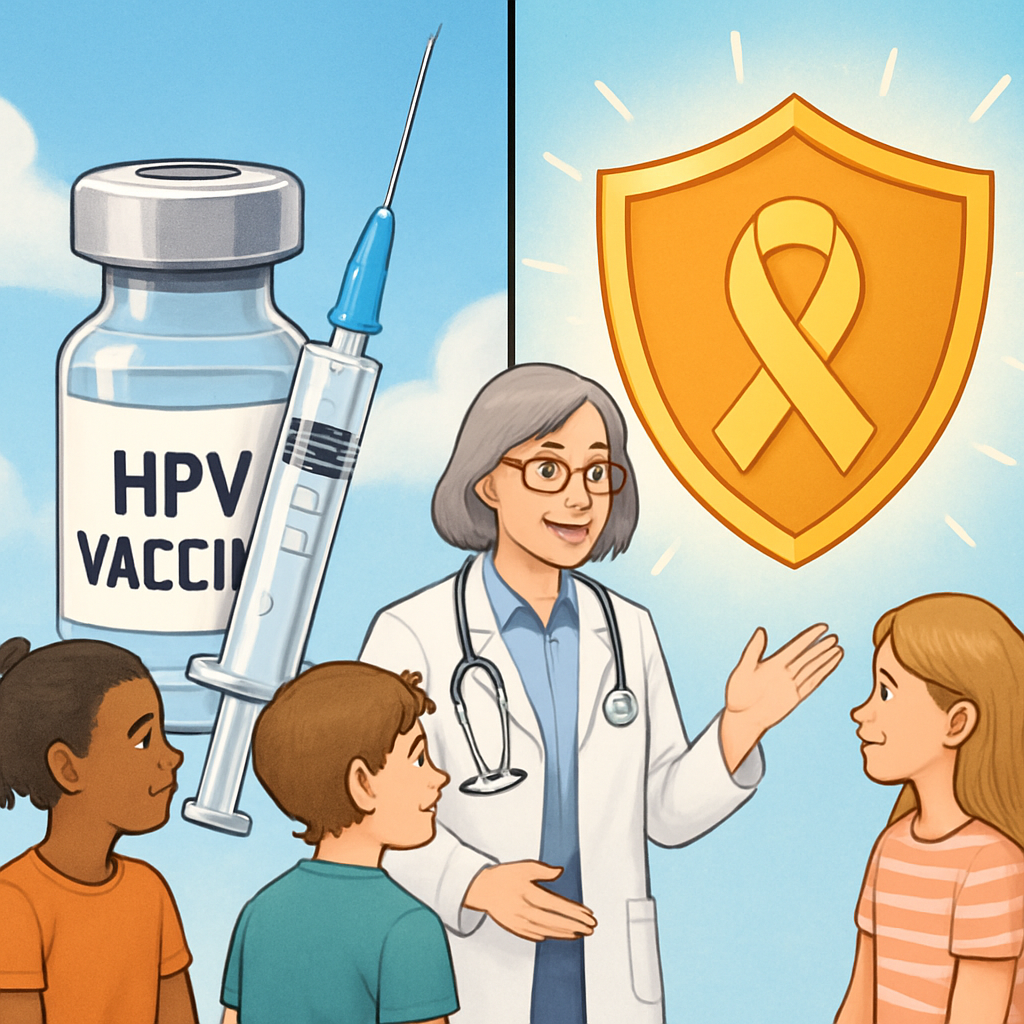
Preteens may soon have something to celebrate: Medical experts are discussing the possibility that one dose of a life-saving cancer vaccine, instead of two, may be enough to protect them.
U.S. vaccination recommendations have become splintered in the past year, with federal officials and doctors’ organizations disagreeing over guidance and even battling each other in court. But both sides have been exploring revisions in longstanding human papillomavirus (HPV) vaccine recommendations.
“This would be a significant shift in terms of what has been communicated for many years about the best way to protect adolescents against HPV,” said Jason Schwartz, PhD, a Yale University vaccine policy researcher.
A look at HPV shots, which debuted 20 years ago, suggests they may now be approaching a crossroads.
HPV and Cancer Risk
HPV is the most common sexually transmitted infection in the U.S.
More than 40 HPV types can infect the genital areas of men and women, plus the lining of the mouth and throat. Certain strains are responsible for most cases of genital warts.
HPV also is a leading cause of nearly 50,000 cancer cases diagnosed in the U.S. each year that affect these body parts. Indeed, about 90% of cervical cancers and anal cancers are attributed to HPV infections, according to the CDC.
In 2006, federal health officials approved the first HPV vaccine, Merck’s Gardasil. A second vaccine, GSK’s Cervarix, was approved in 2009.
Both vaccines are approved for use in males and females, available for kids as young as 9 to adults in their 20s. However, they were prioritized for 11- and 12-year-olds, as the shots work best if given before individuals are sexually active.
Changes in HPV Vaccination Recommendations
Initially, in 2006, HPV vaccinations were recommended only for girls and given as a series of three shots over 6 months. Boys were added in 2011 to prevent them from spreading the virus to girls, which could cause cervical cancer.
Ten years ago, the government changed the dosing recommendations, dropping the number of recommended doses from three to two after studies showed sufficient protection was offered with this amount. Research indicated that two doses worked better when spaced 6 to 12 months apart, allowing them to be given during annual checkups.
Since then, studies in various countries have shown dramatic decreases in infections, genital warts cases, and precancerous cervical lesions.
In 2020, the American Cancer Society updated its guidelines for women, raising the age at which screenings should start to 25, from 21. This change was attributed to data indicating that vaccinations contributed to a decrease in cervical changes that are precursors to cancer.
Evidence continues to be favorable.
The University of Minnesota’s Vaccine Integrity Project recently published a research review showing that HPV vaccines have lowered the risk of genital-area cancers in women. Additionally, a study published in April in the journal JAMA Oncology found that vaccinated males are nearly 50% less likely to develop cancers of the head and neck, esophagus, anus, or penis.
“The duration of protection is long,” said Angela Ulrich, PhD, MPH, who led the Vaccine Integrity Project review. “We have people who are 20, 30, 40 years old who are seeing protection from the HPV vaccine.”
Lower HPV Vaccination Rates
A recent CDC report found vaccination rates against HPV are lower than rates for some other childhood vaccines, as most states do not require HPV vaccinations for school attendance.
Nonetheless, the HPV vaccination rate has remained flat for four consecutive years, with about 63% of teenagers receiving both doses.
The sharper sting of HPV shots could deter some. Doctors have noted that fainting is more common after these injections.
Questions about pain are frequent, said Scott Hadland, MD, MPH, who works at a Boston clinic treating adolescents and young adults.
“Some of my patients tell me it hurts more than other vaccines they’ve received, but only for a moment,” he noted.
The health landscape has also been impacted by the elevation of Robert F. Kennedy Jr. as U.S. health secretary. Before this appointment, he was involved in litigation against Merck over the Gardasil vaccine and falsely claimed that the vaccine increases cervical cancer risk.
Research on One Dose Effectiveness
In January, Kennedy initiated a reduction in the number of recommended HPV doses to one. This change was blocked by a federal judge but reflected consideration among medical experts.
The notion gained traction late last year with a study in Costa Rica tracking over 20,000 girls for 5 years, finding that a single HPV shot provided about 97% protection against cervical cancer, similar to two doses.
A year earlier, research prompted a CDC advisory committee to explore revised recommendations, but this effort was halted when Kennedy dismissed committee members.
The American Academy of Pediatrics—one of the medical groups litigating against Kennedy—makes its own vaccination recommendations and is exploring the possibility that one dose may suffice for some individuals, along with determining the optimal age for vaccination.
Current Recommendations for Vaccination
Recommendations are evolving, but currently, experts advise that kids receive two shots.
While evidence supports one shot being sufficient for girls in preventing cervical cancer, data on other types of cancer in girls and the efficacy of one shot for boys against HPV-related cancers are still lacking, according to the Vaccine Integrity Project review.
Regardless of whether the recommendation remains two shots or shifts to one, it is vital for children to get vaccinated, Hadland emphasized.
“The benefits are very clear. It prevents cancer,” he asserted.
Disclaimer: This article is for informational purposes only and should not be considered medical advice. Always consult a healthcare professional for personalized recommendations.
Fuente: https://www.medpagetoday.com/pediatrics/vaccines/123161
Join the doctors who get the most relevant medical news, curated by specialty, every week — no spam, unsubscribe anytime.